
Stories of Impact
Real stories. Real outcomes.
These are not testimonials.
They are lived experiences from veterans and first responders who have worked through the program and built a new version of everyday life alongside
their dogs.
What you’re about to read is what that actually looks like.
Real stories. Real outcomes.
These are not testimonials.
They are lived experiences from veterans and first responders who have worked through the
program and built a new version of everyday life alongside their dogs.
What you’re about to read is what that actually looks like.
Team Blaze
“Blaze hasn’t just changed my life; he’s given me my life back.”
Before Blaze
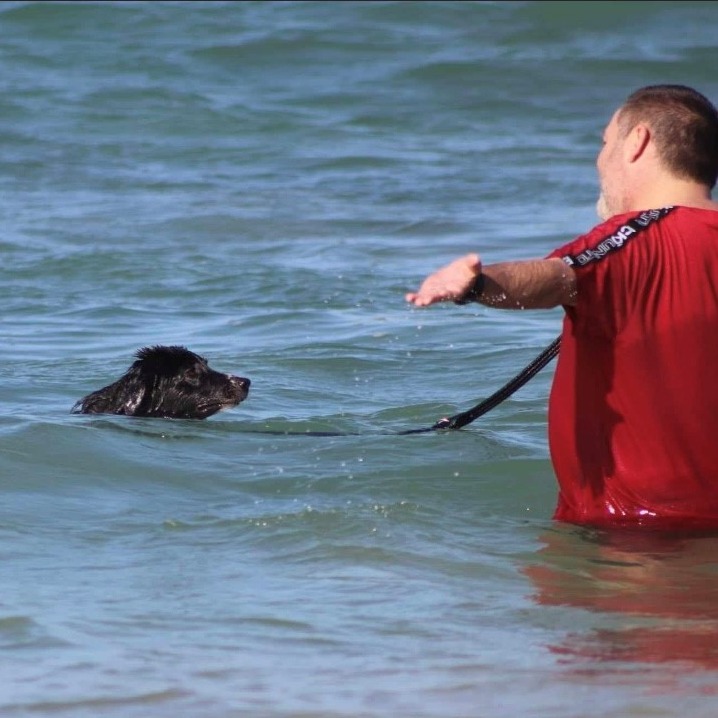
When Shaun submitted his application in April 2022, his world had become increasingly small.
Years of service had taken their toll, and the result was a level of physical and emotional isolation that made everyday life difficult to navigate. Time with family felt strained, social situations were avoided, and even simple outings carried a level of pressure most people never have to think about.
The goals he set at the beginning were not ambitious in the traditional sense. They were basic, human things most people take for granted. Being able to attend his children’s school events. Catch up with mates over a beer. Travel to see family. Simply leave the house without it becoming overwhelming.
At that point, those outcomes felt a long way off.
The Turning Point
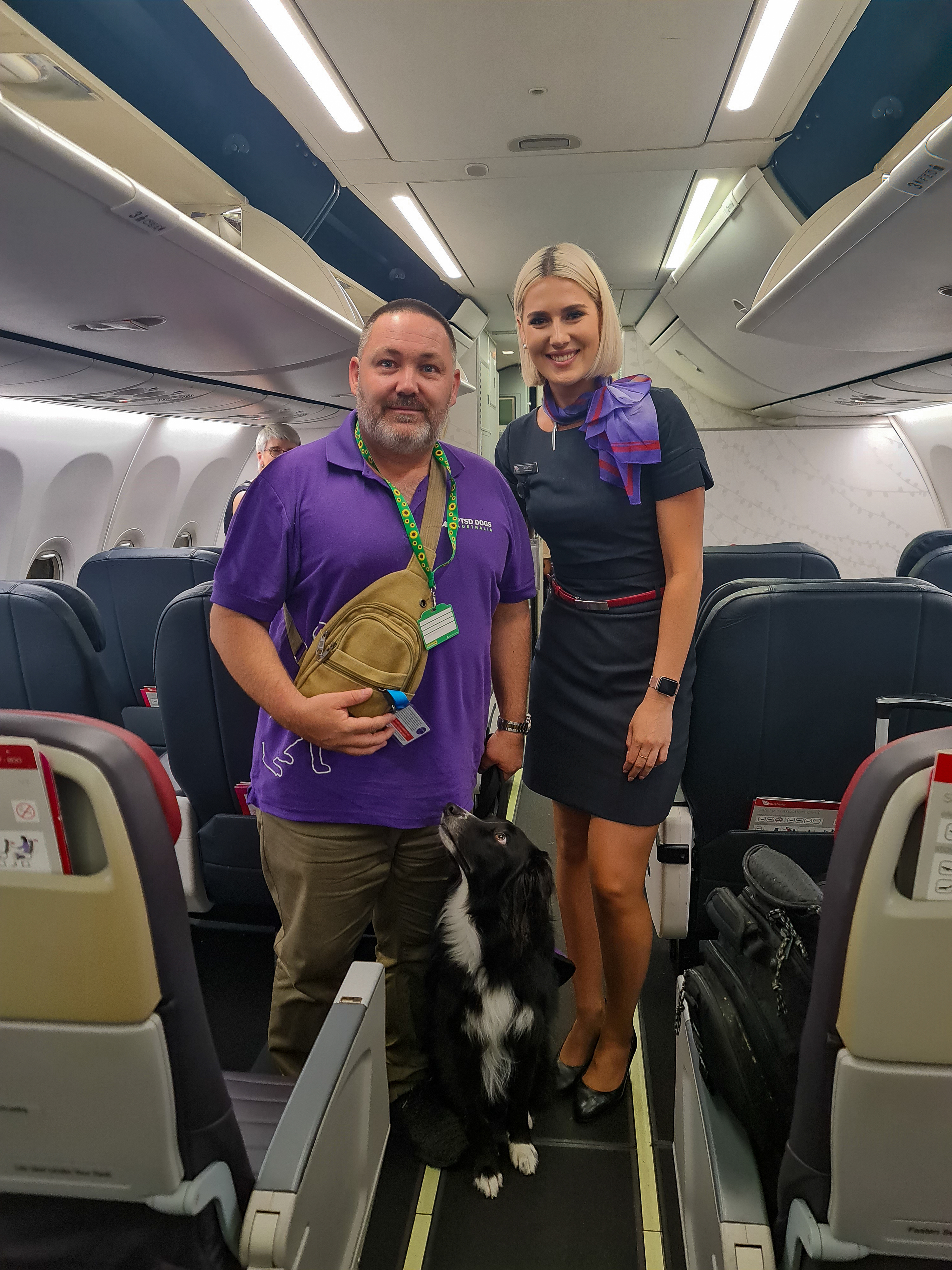
Blaze entered Shaun’s life later in 2022, and the shift began from there.
This wasn’t an overnight transformation. It was a gradual rebuilding of confidence, supported by consistent training and the presence of a dog trained to respond in the moments that matter most.
Blaze learned to interrupt night terrors, creating a sense of safety where there had previously been disruption and exhaustion. In public environments, he provided grounding and space, allowing Shaun to stay present rather than constantly scanning for what
might go wrong.
Over time, that support started
to compound.
What Life Looks Like Now
Today, Shaun’s life looks very different.
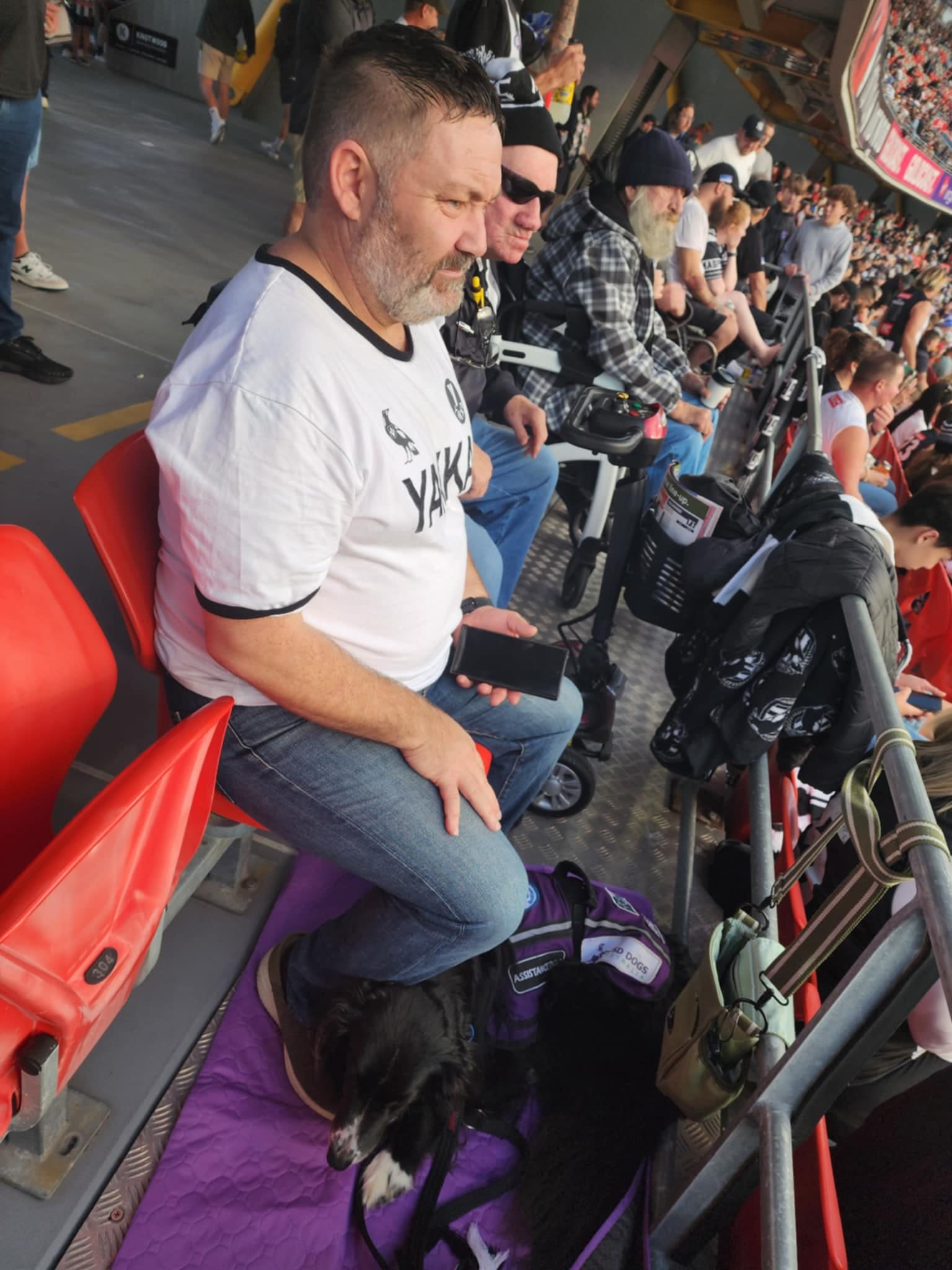
He is present at family events that once felt out of reach. He attends AFL games, travels interstate, and participates in social environments that previously would have been avoided altogether. He has reconnected not only with his family, but also with long-term friends and his broader community, including
his ship’s company.
He has stood in rooms of over 150 people. He has spoken publicly about his experience. He has shown up in ways that once felt impossible.
What might look like normal life from the outside is, for him, something that had to be rebuilt step by step.
Team Blaze
“Blaze hasn’t just changed my life; he’s given me my life back.”
Before Blaze
When Shaun submitted his application in April 2022, his world had become increasingly small.
Years of service had taken their toll, and the result was a level of physical and emotional isolation that made everyday life difficult to navigate. Time with family felt strained, social situations were avoided, and even simple outings carried a level of pressure most people never have to think about.
The goals he set at the beginning were not ambitious in the traditional sense. They were basic, human things most people take for granted. Being able to attend his children’s school events. Catch up with mates over a beer. Travel to see family. Simply leave the house without it becoming overwhelming.
At that point, those outcomes felt a long way off.
The Turning Point
Blaze entered Shaun’s life later in 2022, and the shift began from there.
This wasn’t an overnight transformation. It was a gradual rebuilding of confidence, supported by consistent training and the presence of a dog trained to respond in the moments that matter most.
Blaze learned to interrupt night terrors, creating a sense of safety where there had previously been disruption and exhaustion. In public environments, he provided grounding and space, allowing Shaun to stay present rather than constantly scanning for what might go wrong.
Over time, that support started to compound.
What Life Looks Like Now
Today, Shaun’s life looks very different.
He is present at family events that once felt out of reach. He attends AFL games, travels interstate, and participates in social environments that previously would have been avoided altogether. He has reconnected not only with his family, but also with long-term friends and his broader community, including his ship’s company.
He has stood in rooms of over 150 people. He has spoken publicly about his experience. He has shown up in ways that once felt impossible.
What might look like normal life from the outside is, for him, something that had to be rebuilt step by step.
Team Legend
“You changed my life. You changed my children’s life. You changed my partner’s life.”
Before Legend
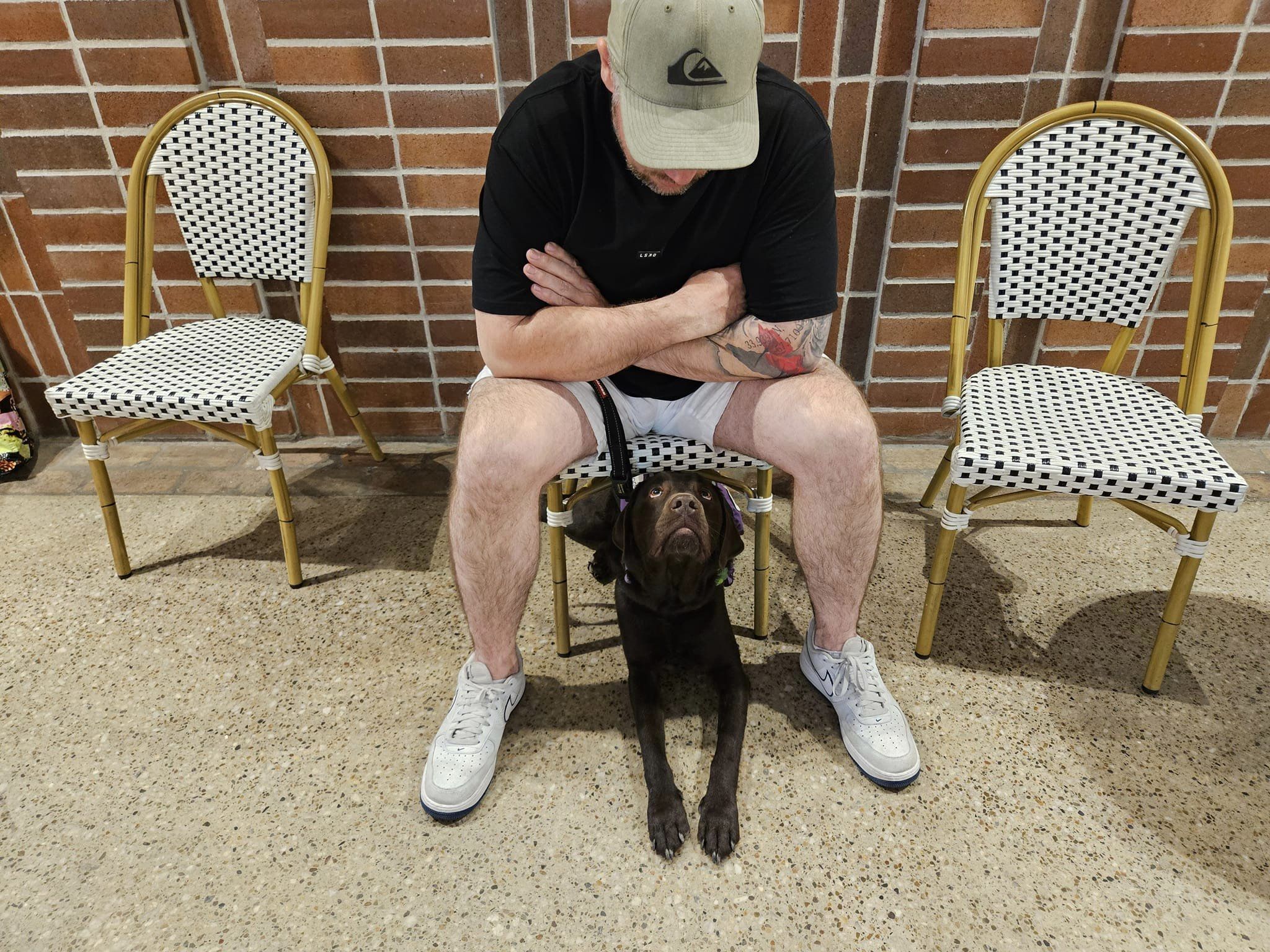
Before Legend came into his life, everyday environments required constant
effort and awareness.
Public spaces were unpredictable and often overwhelming. Sleep was disrupted, and time with family, while important, was not always easy to engage in fully. Even routine activities like shopping or going out for a meal required a level of energy that made them difficult to sustain.
The goals at the start reflected a desire to return to a more stable and connected version of life. Spending time with family without the underlying tension.
Attending school events.
Going on a simple date night.
Feeling calm enough in public to stay present rather than on edge.
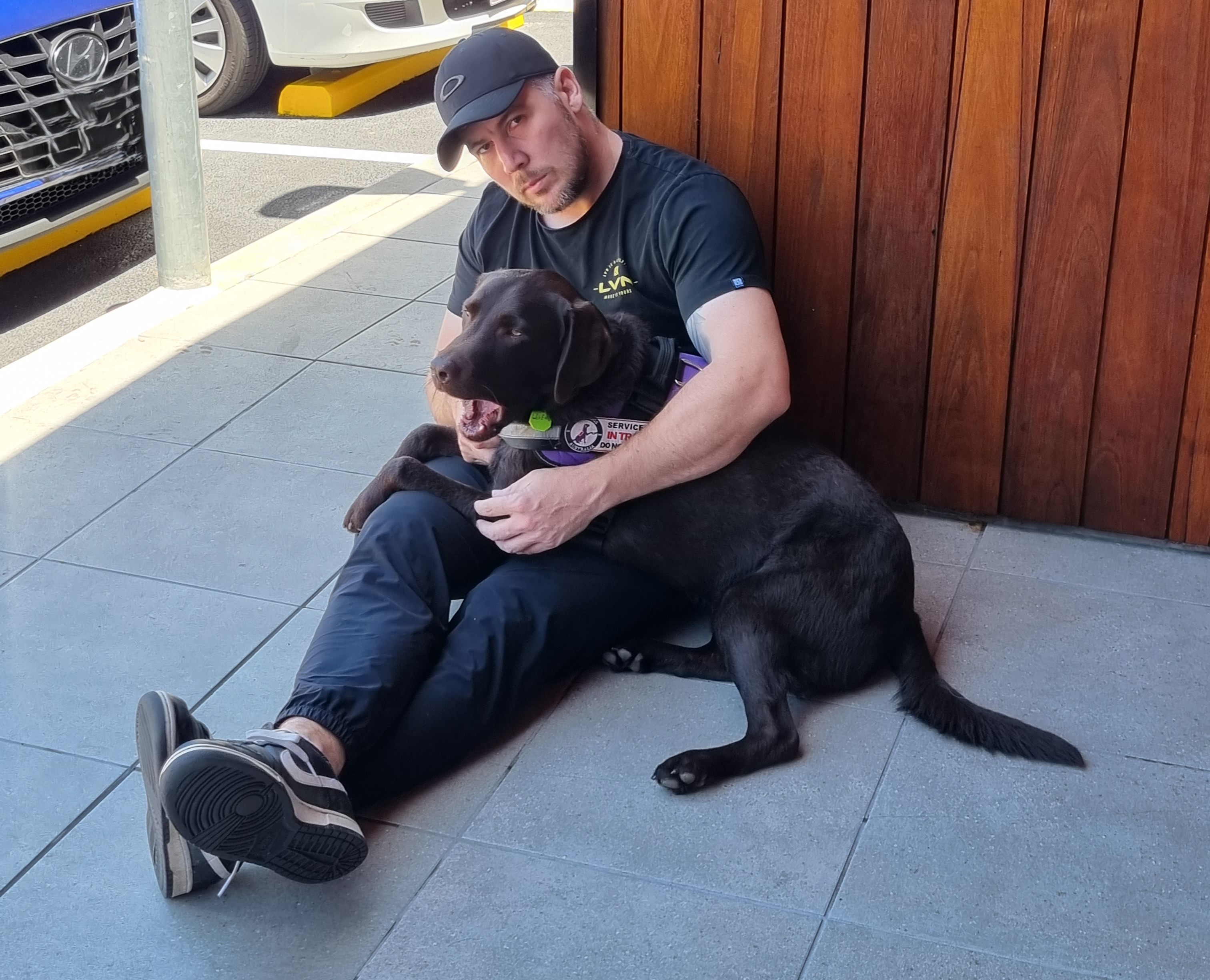
The Turning Point
Legend came home in December 2022.
From that point, change began to take shape, not through a single breakthrough moment, but through consistent,
reliable support.
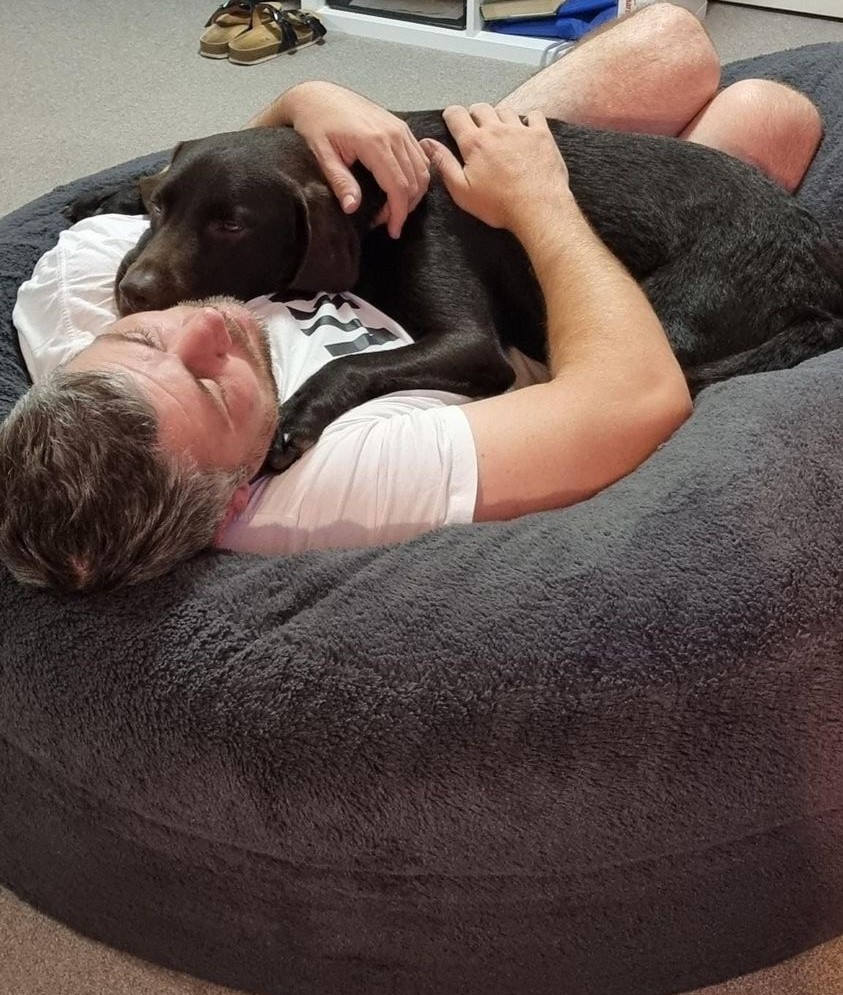
Legend’s role extended beyond companionship. He provided physical grounding during night terrors, often placing his body across his handler to create a sense of safety and interruption. In public, his positioning reduced the need for constant vigilance, allowing attention to shift back to what was actually happening in the moment rather than what might happen next.
That consistency created space for confidence to rebuild.
What Life Looks Like Now
Over time, the impact has extended across all areas of life.
Family events have become accessible again. School activities, Christmas shopping, beach outings, and time away with family are now part of a normal routine rather than something to be worked up to or avoided.
He has returned to attending ANZAC services after a long absence, something that carries both personal and emotional significance. More recently, he has committed to competing in the Cairns Airport Ironman, using that challenge to raise funds for other veterans who are still waiting for the same level of support.
What stands out is not just the individual milestones, but the consistency of being able to participate in life again.
Team Legend
“You changed my life. You changed my children’s life. You changed my partner’s life.”
Before Legend
Before Legend came into his life, everyday environments required constant effort and awareness.
Public spaces were unpredictable and often overwhelming. Sleep was disrupted, and time with family, while important, was not always easy to engage in fully. Even routine activities like shopping or going out for a meal required a level of energy that made them difficult to sustain.
The goals at the start reflected a desire to return to a more stable and connected version of life. Spending time with family without the underlying tension.
Attending school events. Going on a simple date night.
Feeling calm enough in public to stay present rather than on edge.
The Turning Point
Legend came home in December 2022.
From that point, change began to take shape, not through a single breakthrough moment, but through consistent, reliable support.
Legend’s role extended beyond companionship. He provided physical grounding during night terrors, often placing his body across his handler to create a sense of safety and interruption. In public, his positioning reduced the need for constant vigilance, allowing attention to shift back to what was actually happening in the moment rather than what might happen next.
That consistency created space for confidence to rebuild.
What Life Looks Like Now
Over time, the impact has extended across all areas of life.
Family events have become accessible again. School activities, Christmas shopping, beach outings, and time away with family are now part of a normal routine rather than something to be worked up to or avoided.
He has returned to attending ANZAC services after a long absence, something that carries both personal and emotional significance. More recently, he has committed to competing in the Cairns Airport Ironman, using that challenge to raise funds for other veterans who are still waiting for the same level of support.
What stands out is not just the individual milestones, but the consistency of being able to participate in life again.
Team Max
“Through the difficulties… I wondered if this was going to work. The training team stayed supportive. We followed the process. Now I’m starting to realise just how much of a difference he makes to me.”
Before Max
Max’s journey began very differently.
He was rescued from a high-risk pound environment, carrying behaviours that made him difficult to manage. Anxiety, reactivity, and an inability to settle meant that, without intervention, his future
was uncertain.
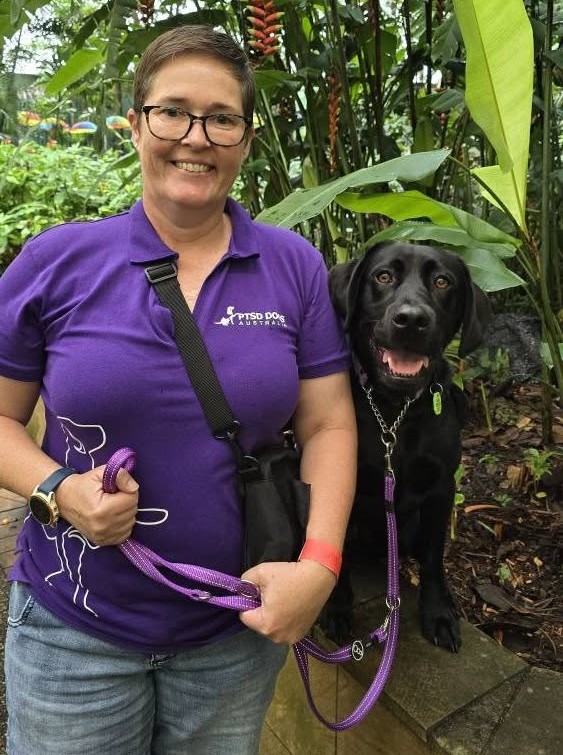
At the same time, Michelle was stepping into the PTSD Dogs program, initially with the intention of fostering and supporting a dog in training. Her role was to provide structure, consistency, and care as part of the development process.
Both were, in different ways, at the beginning of a process that required patience and commitment.
The Turning Point
After an initial placement that was cut short due to the handler’s health, Max’s path shifted.
What began as a fostering arrangement evolved into something more personal. During a return to the training facility, Max made it clear, in a very simple but unmistakable way, that he had chosen where he belonged. A moment of connection that changed the direction
for both of them.
From there, the work became focused
and ongoing.
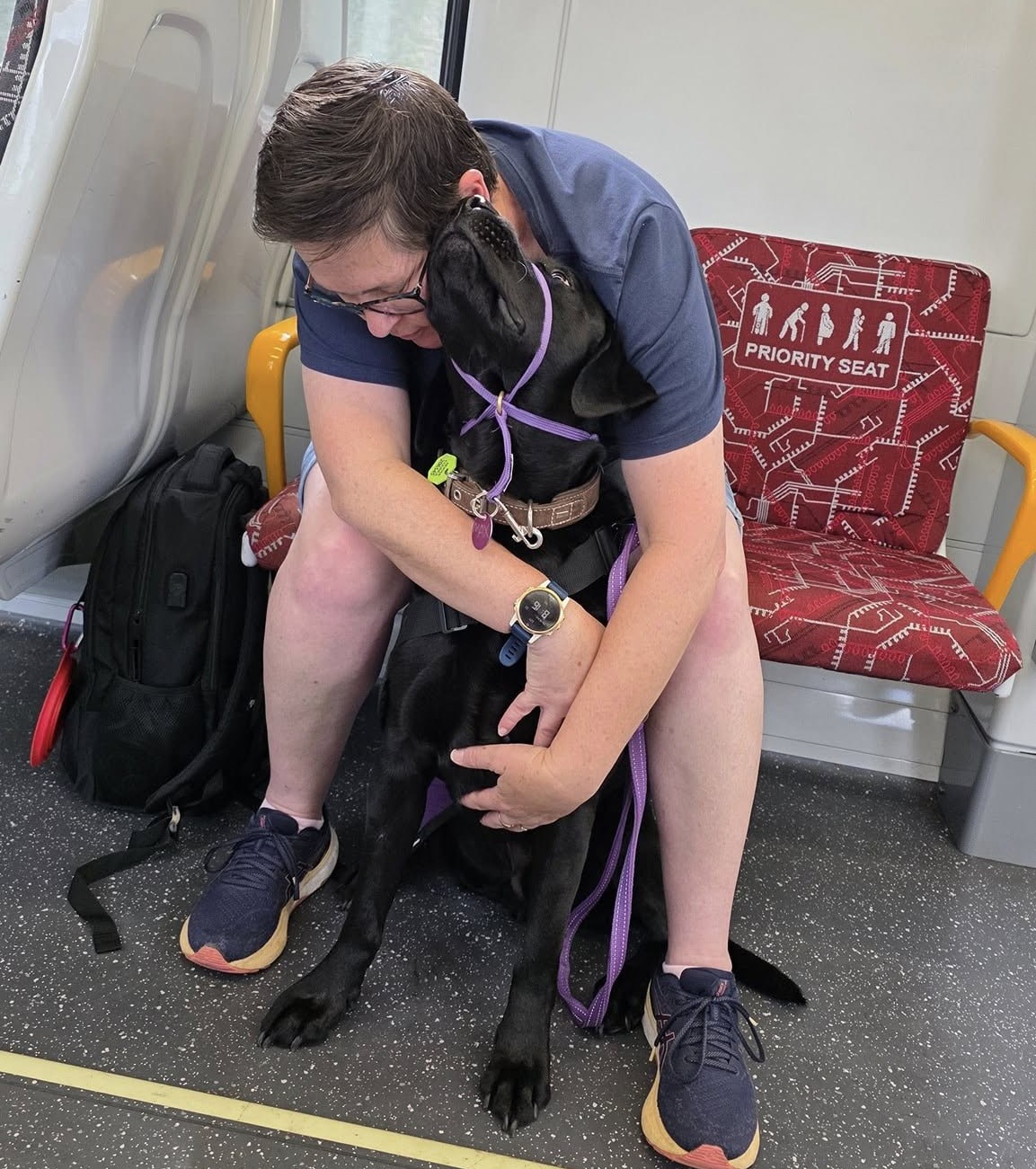
Training in public environments. Exposure to transport systems including buses, ferries, and trains. Gradual integration into everyday life, including workplace settings and busy public spaces.
It wasn’t without setbacks. There were periods where Max’s confidence dropped and required structured retraining to rebuild his ability to operate in high-stimulation environments.
What mattered was that the
process continued.
What Life Looks Like Now
Today, Max is embedded in
Michelle’s daily life.
He accompanies her into public spaces, supports her in environments that require sustained focus, and provides a level of consistency that has made day-to-day life more manageable.
He has worked alongside her in demanding environments, including traffic duties and crowded public areas. He has completed his Public Access Test and continues to develop through ongoing training.
The bond between them has strengthened over time, particularly during periods where Michelle has been managing extended time on her own.
What initially felt uncertain has become a source of stability and support.
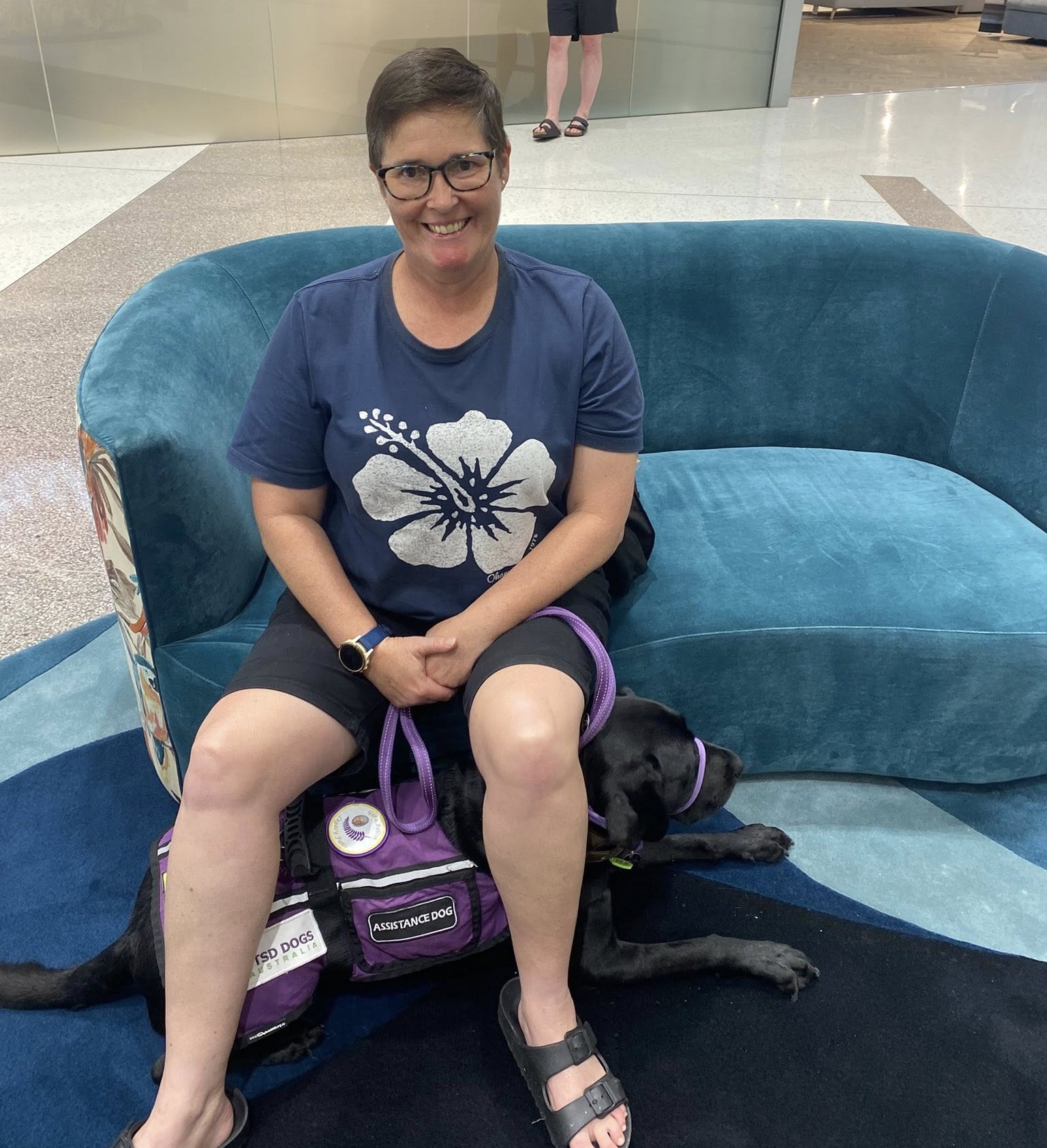
Team Max
“Through the difficulties… I wondered if this was going to work. The training team stayed supportive. We followed the process. Now I’m starting to realise just how much of a difference he makes to me.”
Before Max
Max’s journey began very differently.
He was rescued from a high-risk pound environment, carrying behaviours that made him difficult to manage. Anxiety, reactivity, and an inability to settle meant that, without intervention, his future was uncertain.
At the same time, Michelle was stepping into the PTSD Dogs program, initially with the intention of fostering and supporting a dog in training. Her role was to provide structure, consistency, and care as part of the development process.
Both were, in different ways, at the beginning of a process that required patience and commitment.
The Turning Point
After an initial placement that was cut short due to the handler’s health, Max’s path shifted.
What began as a fostering arrangement evolved into something more personal. During a return to the training facility, Max made it clear, in a very simple but unmistakable way, that he had chosen where he belonged. A moment of connection that changed the direction for both of them.
From there, the work became focused and ongoing.
Training in public environments. Exposure to transport systems including buses, ferries, and trains. Gradual integration into everyday life, including workplace settings and busy public spaces.
It wasn’t without setbacks. There were periods where Max’s confidence dropped and required structured retraining to rebuild his ability to operate in high-stimulation environments.
What mattered was that the process continued.
What Life Looks Like Now
Today, Max is embedded in Michelle’s daily life.
He accompanies her into public spaces, supports her in environments that require sustained focus, and provides a level of consistency that has made day-to-day life more manageable.
He has worked alongside her in demanding environments, including traffic duties and crowded public areas. He has completed his Public Access Test and continues to develop through ongoing training.
The bond between them has strengthened over time, particularly during periods where Michelle has been managing extended time on her own.
What initially felt uncertain has become a source of stability and support.
Taking the Next Step, If and When You Choose
Considering a Bequest does not require a decision today.
For many, the next step is simply learning more, reflecting on what legacy means to them, or having a conversation with an adviser or family member.
If you would like information or a confidential discussion, we are here to provide clarity and answer questions, without expectation.
Taking the Next Step, If and When You Choose
Considering a Bequest does not require a decision today.
For many, the next step is simply learning more, reflecting on what legacy means to them, or having a conversation with an adviser or family member.
If you would like information or a confidential discussion, we are here to provide clarity and answer questions, without expectation.
Get In Touch
Get In Touch
2026 - PTSD Dogs Australia | All Rights Reserved